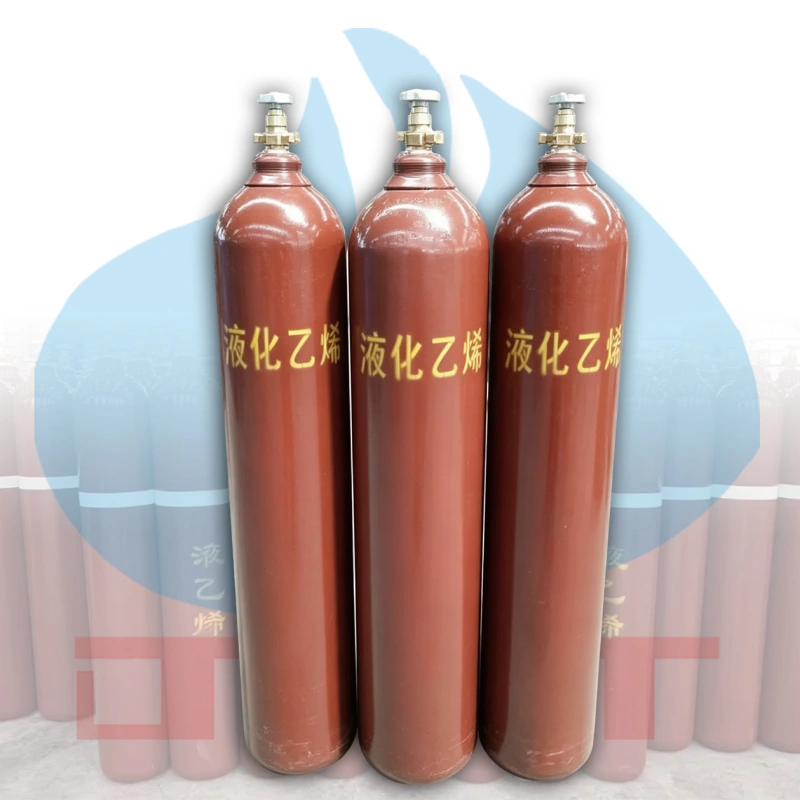
Ethylene is a colorless, odorless, and flammable organic compound with the molecular formula C₂H₄. It has a double bond structure and is one of the simplest unsaturated hydrocarbons. Ethylene is commonly used in the manufacture of plastics, rubber, and solvents.
Chemical Structure and Physical Properties of Ethylene
Ethylene (C₂H₄) is a colorless and odorless gas with a double bond structure (CH₂=CH₂). Its molecular weight is 28.05 g/mol, density is 0.00126 g/cm³, boiling point is -103.7℃, and melting point is -169.4℃. Due to its unsaturated double bond structure, ethylene can undergo addition reactions with other compounds, such as propylene, esters, and alcohols.
Ethylene is a reactive organic molecule and is easily oxidized to compounds such as acetaldehyde and acetic acid. When exposed to an ignition source or high temperature in air, ethylene can burn, releasing a large amount of heat.
Ethylene Production Methods
The industrial production of ethylene is mainly achieved through oil refining and cracking processes. In the oil refining process, light hydrocarbons are fractionated and then converted into ethylene through catalytic cracking or thermal decomposition. Additionally, catalysts are often used in ethylene production, such as in the oxidation of ethylene to produce vinyl alcohol and the hydrogenation of ethylene to produce ethane.
Applications of Ethylene Ethylene has a wide range of industrial applications, primarily in the manufacture of plastics and rubber. Due to its high polymerization reactivity, ethylene can react with other monomers to produce many types of polymers, such as polyethylene and polypropylene. Furthermore, ethylene is used in the production of solvents, synthetic rubber, fragrances and dyes, and coatings.