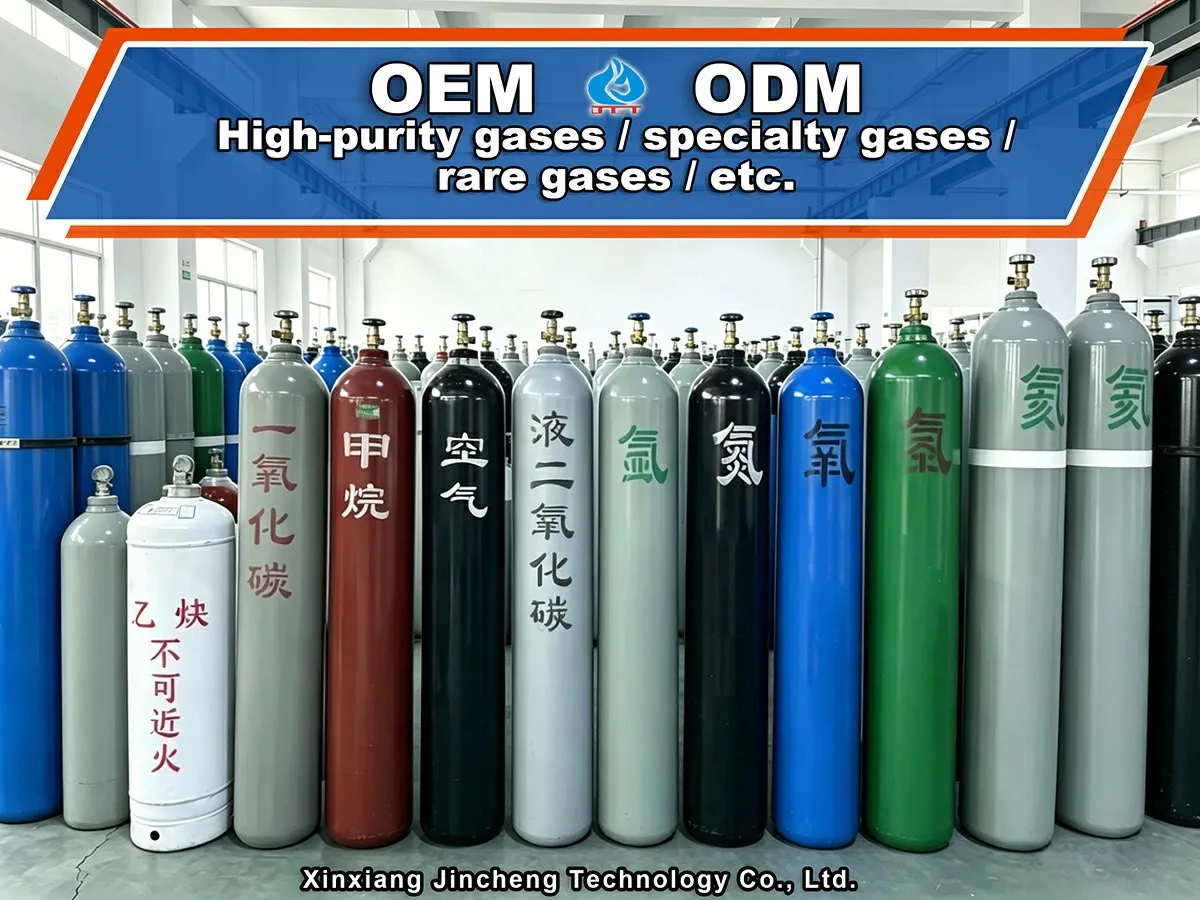
Specialty gases have wide applications in various fields such as industry, scientific research, and medicine. Due to their unique chemical properties and uses, selecting the right specialty gas is particularly important. This article will briefly introduce how to choose specialty gases, ensuring you can purchase the appropriate product according to your needs.
Understanding the Types and Uses of Specialty Gases
Specialty gases are diverse, including inert gases, reactive gases, and gas mixtures. Before selecting a specialty gas, it is essential to clarify its type and purpose. For example, inert gases such as argon and helium are mainly used for protective atmospheres and cooling; reactive gases such as oxygen and hydrogen can be used for chemical reactions and combustion. Understanding the characteristics and uses of different gases will help you select the gas you need more accurately.
Considering Gas Purity and Quality
The purity and quality of specialty gases have a crucial impact on experimental results and product quality. When selecting specialty gases, pay attention to the gas's purity, impurity content, and quality control during the production process. Generally, high-purity gases are more suitable for scientific research and high-end industrial applications.
Consider Gas Packaging and Storage Methods
The packaging and storage methods of specialty gases are also factors to consider during the selection process. The packaging materials, sealing performance, and storage environment all affect the quality and stability of the gas. Ensuring that the gas is not disturbed by external factors during storage and transportation helps maintain its stability and purity.
Select Gases Based on Usage Environment and Safety Requirements
When selecting specialty gases, it is also necessary to consider the usage environment and safety requirements. For example, when using specialty gases in high-temperature, high-pressure, or flammable and explosive environments, gases adapted to these environments must be selected, and necessary safety measures must be taken. For some toxic or harmful specialty gases, attention must also be paid to safety protection and exhaust gas treatment.
Consider Cost and Budget
Cost and budget are also factors that cannot be ignored when selecting specialty gases. Different types and purities of specialty gases have significantly different prices, so a balance must be struck based on actual needs and economic conditions. While meeting usage requirements, choose gas products with the highest cost-effectiveness possible.
Refer to Professional Advice and Opinions
For users unfamiliar with specialty gases, referring to professional advice and opinions is very beneficial. You can consult gas suppliers, industry experts, or technical personnel in related fields to understand the properties, uses, and purchasing considerations of various gases. You can also consult relevant literature and materials to obtain more information about specialty gases.